The Discipline of Doing Less: Lessons from Winter Trees
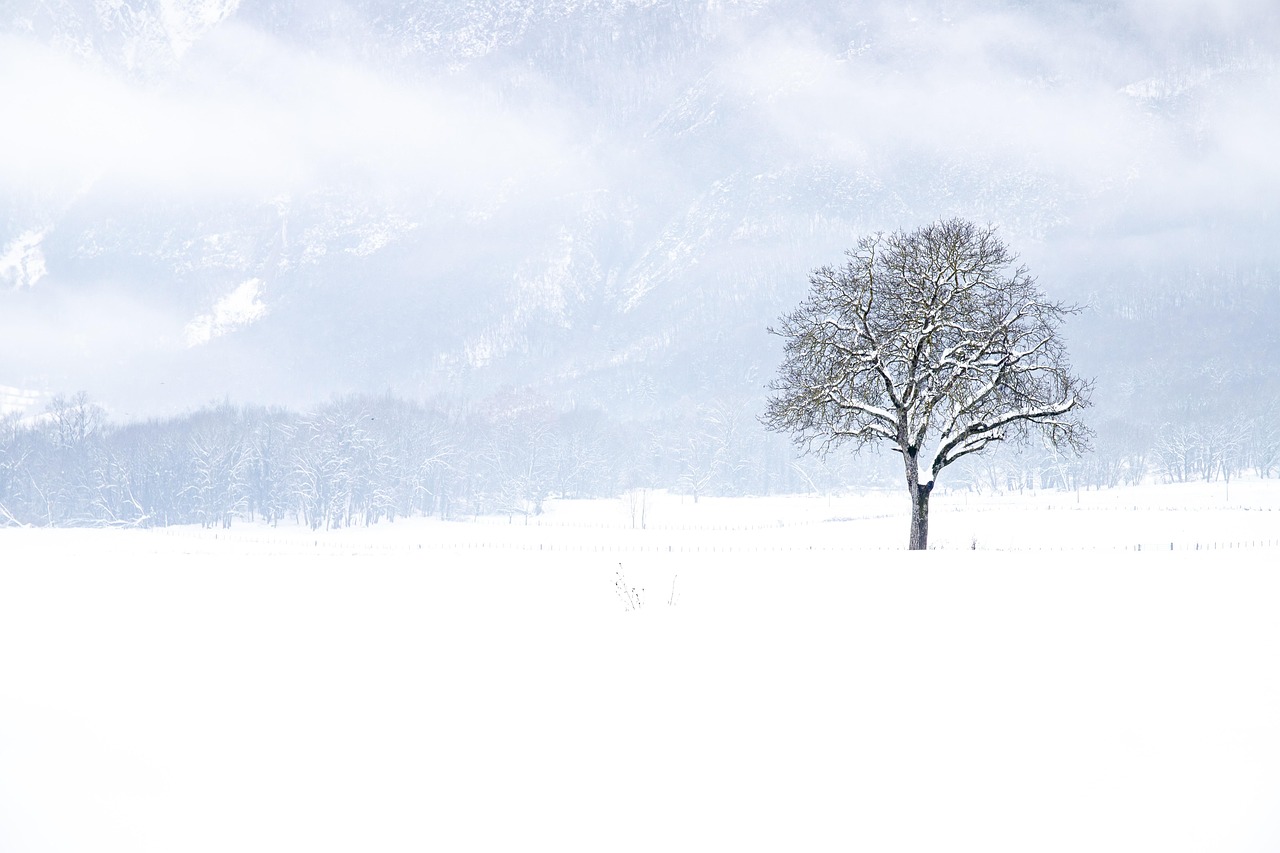
Every winter I fall a little in love with bare trees. Not the evergreens — they are lovely in their way, but they are not making a point. The deciduous ones are. A stripped oak in January is a masterclass in restraint. It has let go of everything it does not need for the season, and it stands there, unadorned and unembarrassed, doing nothing at all.
We tend to read bare trees as a kind of privation — the leaves are gone, the color is gone, the show is over. But that is a summer-centric view. From the tree's perspective, winter is not a loss. It is a strategy. The tree has deliberately withdrawn its resources, sealed its wounds, and entered a state of suspended animation that will allow it to survive the cold and come back stronger. It is not doing nothing. It is doing the most important thing, which is conserving.
The Productivity Trap
I used to treat winter as a problem to be solved. The short days, the low light, the enforced slowness — I fought all of it. I scheduled more, pushed harder, tried to keep my output at summer levels. The result was always the same: by February I was exhausted, sick, and vaguely ashamed of myself for being tired. I was a tree trying to keep its leaves in a season that had no sun for them.
The problem was not winter. The problem was my assumption that constant productivity is the natural state of a healthy person. It is not. Every living system has seasons of growth and seasons of rest, and the rest is not optional. It is part of the cycle. A tree that refused to drop its leaves would simply die when the frost came. We are not so different.
What the winter tree offers is a different definition of discipline. We usually think of discipline as the ability to keep going — to push through, to maintain output, to resist the urge to stop. But there is a second kind of discipline, and it may be the harder one: the discipline of stopping. Of letting go. Of trusting that the work will still be there when the light returns, and that you will be better able to do it if you have rested.
Practicing Winter on Purpose
I have started trying to practice winter deliberately, even outside of winter. When I notice the signs of forced growth — the fraying focus, the irritability, the sense that everything is a chore — I try to treat it like a cold snap. I drop my leaves. I cancel what can be canceled. I go to bed early. I let some things go undone.
This is not laziness. It is the same logic the tree uses: reduce the surface area, conserve the resources, wait for better conditions. The things I drop are rarely the important ones. They are the leaves — the extra commitments, the optional projects, the obligations I took on out of habit or vanity. Letting them go does not diminish me. It reveals the shape underneath, which is the whole point of a bare tree. You can finally see its architecture.
The tree does not apologize for being bare. It does not feel guilty about the leaves it has shed. It simply stands there, patient and unadorned, trusting the cycle. I am trying to learn this. I am trying to be less afraid of the empty season, and more willing to let it do its quiet work. Spring will come. It always does. And when it does, I want to have something left to grow with.